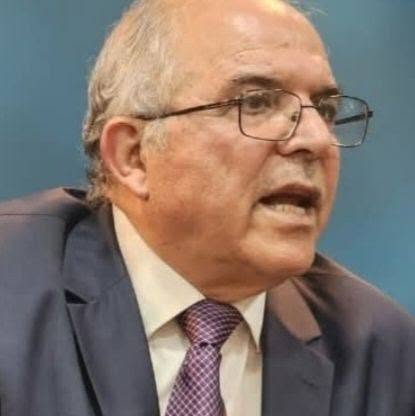
Ibn Khaldun
By Walid Abdulhay
Translated from Arabic by Rania Ahwazia. November 3/2026
The Arab thinker Ibn Khaldun is a milestone in the culture of “confronting oneself with strict objectivity”, as when he diagnosed the Arab society, he laid the basis for a pessimistic view of the “Arab personality” through three central dimensions, namely Bedouinism, nervousness, and religion, and the divisions of this Khaldun triad are clear in his following statements: that “the Arabs are the most savage and primitive nations and the farthest away from urban urbanization, but they are the least interested in industry and professions”, and then he says that “the Arabs are the farthest nations away from the king’s policy, and they are the most difficult nations to obey each other.” Some of this stems from the creation of arrogance and competition. Still, they point to another dimension – confirming the duality of the Arab personality as rulers and societies – and literally say that the Arabs do not get the king except with a religious character of prophecy, guardianship, or a great effect of religion. Without him, it is difficult for them to establish a stable State.” He moves on to the third dimension of the Arab personality, which is “nervousness”, saying, “The Arabs are among the most preserved people for their genealogy, which forms the basis of cohesion in the absence of a central authority.”
To what extent do the indicators of the Arab present still reinforce Ibn Khaldun’s trilogy of “Bedouinism, Nervousness and Religion”? Indicators and quantitative calculations indicate that Bedouin and the concept of Ibn Khaldun, “and the boundaries of his social context,” extend beyond desert geography. Still, it expands to “the least care about industrialization”, and in our contemporary time, the index of “manufacturing industry” is the measure of urbanization, and here we find that the comparison between Arabs and others indicates that the indicators of the percentage of manufacturing industry in the gross Arab GDP are (11%). In comparison, in urban industrial societies it is about 23%; that is, its percentage in the Arab World is lower. If we move to the second dimension in Ibn Khaldun’s trilogy, which is neuroticism, the distribution of gains, appointments, promotions, and the provision of privileges based on kinship and lineage reaches more than 39 times its rate in urban industrial societies, according to more than ten academic studies (including university theses and reports of international organizations) in Arab countries, and the percentage of kinship in the structure of political power between the occupants of the most important positions in the Arab strategic decision-making departments is The highest in the World without any dispute, while the third most important in the Khaldun model is represented in religion, and here objective scientific research reveals that the strongest parties – even with the fraud of elections – in the ArabWorldd are the religious parties, and that “the pragmatic employment of religious symbols such as the presence of holy religious places, kinship relations with historical religious symbols, or the use of religious descriptions of certain high positions… In this regard, the quantitative indications indicate that the number of countries in the World whose constitutions or constituent systems stipulate the religion of the State or the religion of the ruler, or consider religion as the main source of legislation, is 43 out of 199 countries studied, i.e., the percentage globally is 21.6%. In contrast, the percentage among Arab countries is 90.9%. That’s more than four times the global rate.
If we add two other dimensions to the above, the distance between us and civilizational development becomes clear. It turns out that the “desert unconscious” constrains the need to adapt to the urban unconscious. In contrast, the first dimension is the loss of the “center of the Arab region”; out of the 28 regional organizations whose activities towards the achievement of their goals were measured, it was found that the university ranked 26th in achieving the goals (i.e., at the bottom of the list), which is an extension of the complete paralysis of the Arab Maghreb Union (there has not been a summit meeting since April 1994 – that is, 32 years ago).And to the sometimes silent and sometimes resounding conflict between the Gulf Cooperation Council (GCC) countries, whose geophysical values still determine the contents of their consciousness and unconsciousness, and then the almost complete absence of Egypt’s role as a “center State, ” due to its suffering in consolidating this position, which Arab countries have fiercely resisted in previous stages, and their contemporary leadership and political orientations do not seem eager or qualified for this leadership role. It is clear that all of the above reinforces Ibn Khaldun’s idea of the Arabs’ difficulty in submission, which is an extension of the historical mobility of the leadership position in Arab history, which is embodied in the movement of the capital of the Arab-Islamic countries from the Arabian Peninsula (the period of the Rightly Guided Caliphs) to Damascus (the period of the Umayyads), then to Baghdad (the period of the Abbasids), and then to Cairo (the period of the Fatimids… The list goes on).
Finally, after publishing my study on a proposed model for measuring sovereignty and independence in decision-making, I applied the model in the Arab World. It was clear from the measurement that the Arab region stands in comparison with the other eight geopolitical regions in the World, based on a comparison of five central indicators (distributed into 25 sub-indicators) at the bottom of the list, as the rate of Arab sovereignty and independence was recorded at less than 35%.
May God have mercy on Ibn Khaldun