*Usurped Arab Lands
SALEM SIRRIEH (Ph.D)
*Burke Academy Journal of Humanities and Social Sciences/2022/ Volume (3) Issue (2): 13-20
1- AHWAZ
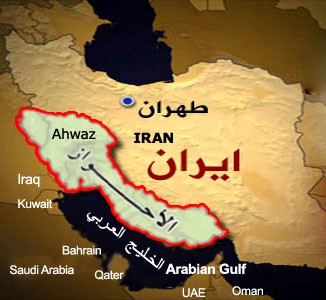
Ahwaz, also called Arabistan, is part of the land of the Arabs robbed of them (as robbed of others) ninety-five years ago by Iran on the twentieth of April of 1925 during the reign of the Shah, after Sheikh Khazal Al-Kaabi, Prince of Ahwaz, was lured into a trap where he was arrested and imprisoned in Tehran with a group of his companions until 1936 and frequent accounts say: The poison was injected into food and he died poisoned.
The area of this Arab region is 370,000 km2, more than the total area of Lebanon, Palestine, Syria, and Jordan combined. It is home to 12 million Arab citizens. Economically, it is the lifeblood and beating heart of Iran. Oil and natural gas extracted from Ahvaz’s oil fields account for 85 percent of Iran’s total oil and gas production. 75 percent of Iran’s total electricity capacity is produced in Ahvaz. Ahwaz annually produces three million tons of wheat, which is equal to 50 percent of Iran’s total production, and produces 90 percent of Iran’s date crops. Eight rivers flow into the region, making 65 percent of Iran’s arable land concentrated in that region. The presence of these rivers in Ahwaz made the region the most important center for the establishment of nuclear reactors in Iran, the most famous of which is the Bushehr reactor (1) and therefore all its oil and agricultural resources are looted from Iran for the purpose of harming the Arabs and achieving its expansionist ambitions. Thanks to this region, Iran overlooks the Arab Gulf and falsely claims that it is a Persian Gulf. Iran has built three large dams on the Karun River near the capital of Ahwaz, and the number of dams built on the rivers has reached 17 for the purpose of irrigating the distant Iranian provinces, generating electric power and depriving Arab villages of them. (2)
The Arabism of Ahwaz:
I have inhabited Ahwaz throughout history Nabataeans and Palmyra, a people descended from the Arab origin, and the Arab tribes that inhabited Ahwaz tribe Rabia and Banu Kaab and Banu Amer and Banu Tarf and Bakr and Tamim and war and Mutair and Dawasir and Shammar and Anza and Dhafir and Subai and Otaiba and many other tribes and all Arab tribes have their extension in the Arabian Peninsula and have princes and sheikhs govern it. The two rivers and the ancient ruins of this civilization are still visible to this day despite the multiple attempts to obliterate the history of Ahwaz, especially that history homogeneous with the successive civilizations of Iraq, a history that is completely different from the civilization of Persia, which clearly shows the complete separation between Ahwaz and Persia, the Arab region of Ahwaz roots, history and geography was within the state of Hammurabi, and the presence of Arabs in it dates back to the year 311 BC, and it was under the rule of the Islamic Caliphate following the state of Basra, until the emergence of the Arab state of Al-Mushasha’i, The Safavid state and the Ottoman Caliphate recognized it as an independent state, until the Kaabi state (1724 – 1925 AD) was established and maintained its independence until its fall at the hands of Shah Pahlavi (3), a fact that everyone unfortunately jumps on, some of them hypocritical to Iran, and some to avoid problems, while the truth is that Ahwaz is a pure Arab region that has been forgotten, and the Arabs mentioned it in the past in their poems, including the poet Jarir by saying:
See my cousins, Ahwaz is your home… And the Terry River, but the Arabs did not know you
Persian persecution: The Iranian authorities have addressed the situation in the occupied Arab Ahwaz from the police security door, igniting daily executions and hanging Ahwazis on gallows, and also using mechanical levers to increase terror and repression, without the slightest degrees of litigation and fair trials, using the hanger of “infiltrators” and “traitors”… etc. from the Basij dictionary, to justify repression and cold-blooded killing, in light of the Arab and international silence about bringing about any real action to save an occupied people whose only fault is that it is Arab, so the Pahlavi regime did not leave a means to suppress popular movements and uprisings except to practice it, with the aim of dividing the region and uprooting its Arab roots. These practices did not stop with the fall of Shah Mohammad Reza Pahlavi, but continued and multiplied during the era of the Islamic Republic.
1. Imposing Persian as an official language, deliberately neglecting the teaching of Arabic, and banning localpublicationss or radio stations in Arabic.
2 – Diverting riverbeds into Iran to kill agricultural lands in Ahwaz and dry up the primary sources of livelihood of the population to migrate them to areas inside Iran to dissolve into other nationalities. The Ahwaz region witnessed massive flooding at the end of March 2019. Instead of helping the people protect their homes and lands, the state opened the ferries of dams on three rivers, flooding agricultural land with water and thus forcing residents to leave. The people of Al-Rafi, whose villages and farming lands suffered heavy losses as a result of the floods and deliberate dumping, said, “The water washed away everything in its path, trees, agricultural crops, and even hastily built houses, so its residents were forced to evacuate their homes before the disaster occurred:. The Iranian authorities also opened gates from the Abbaspour Dam, located in the Suleiman Mosque, after opening the gates of three dams in Ahvaz: the Maroun Dam, the Al-Diz Dam, and the Karkha Dam, under the pretext of the high percentage of water behind those dams, according to Iran’s official statement. Ahwaz villages have witnessed clashes between the people of those villages and the Iranian Revolutionary Guard forces, which are trying to divert the course of dams and floods on those agricultural lands in Ahwazi villages, which led to Ahwazi casualties shot by security forces, wounding dozens, and displacing tens of thousands from the area, which is what the Iranian authorities are seeking. I have received dozens of videos of the opening of dam ferries and the displacement of the population (4), and what is confident that the observer concludes is that these operations are deliberate.
3- Imposing Persian names for newborns, and those who insist on an Arabic name contrary to Iranian public taste will deny them official documents. It was to change the names of the Arab regions with Persian names until Arabistan became Khuzestan, the city of Hawizeh became (Dasht Mishan), Khafajia became (Susankard), Salhiya became (Andmeshk), Ahwaz became (Ahvaz), Khor Abdullah Port became (Bandar Shahpour Port), Khazal Street in Muhammara became (Belhawi Street), the city of Muhammara became (Khorramshahr).
4-The restrictions on Ahwaz youth were tightened by closing their fields of work ,forcing them to migrate to Iran and return to their remote places of work.
5 Abolishing the political, administrative, and judicial institutions of Arab governance, and declaring direct military rule in Arabistan.
6 Deprivation of the most fundamental political rights and freedoms, which provide for the right of the people to participate in the governance of their country, either directly or through freely chosen representatives. (5)
Ahwazi resistance:
For more than 90 years, the Arab people in Ahwaz have resisted slander, uprooting, and oppression and refuse to leave their country. 17 Ahwazi organizations suffer from fragmentation and conflicting ideologies within three lines of thought.
1- The Marxist trend associated with the Communist Party of Tudeh focused on social rights and demands.
2—The religious trend concerns the Iranian authority (a replica of the religious parties that ruled Iraq after its occupation). The prominent symbol of this trend is Ali Shamkhani (Minister of Defense).
3- The nationalist trend, which calls for complete independence from Iran. This is a trend that Iran is fiercely suppressing.
After the Baath Party came to power in Iraq in 1968, it began to support the Ahwaz struggle, where the Popular Front for the Liberation of Ahwaz was established. This front shook the ground under the legs of SAVAK and its agents in Ahwaz, and the Arab population could not help but return to the struggle, so they established a new organization called the “Arab Jamahiriya Movement for the Liberation of Ahwaz” during the war with Iran, taking advantage of the emerging situation, where they invented a variety of new methods to fight the Iranian security services to preserve their cultural identity and Arab presence.
Below is a summary of the uprisings of this living Arab people:
1. Only three months after the occupation of Ahwaz, which took place on April 20, 1925, where the soldiers of Sheikh Khazal and his private guards stood against the policy of separation, and they carried out a revolution called “The Revolution of the Boys” on July 22, 1925, led by the two martyrs (Shalash and Sultan).
2 Shaykh ‘Abd al-Muhsin al-Khaqani, a prominent Ahwaz personality respected by all the Ahwaz Arab people, together with some of his comrades and supporters, led another armed popular uprising in Mohammarah that expanded to include the cities of Ahwaz.
3- The revolution known as the Hawizeh Revolution in 1928: Led by the prominent martyr Muhyiddin Al-Za’iraq, head of the Al-Shorafa tribes, who formed a six-month government, and observers of the events of the revolution noted the participation of Ahwazi women in this revolution.
4 Bani Taraf Intifada (I) in 1936.
5- The widespread popular uprising of which the Kaab al-Debis clan was the vanguard in 1940.
6 Gypsy uprising of 1943: This revolution is led by Sheikh Jasib bin Sheikh martyr Khazal Al-Kaabi.
7- The movement of Sheikh Abdullah bin Sheikh martyr Khazal Al-Kaabi in 1944.
8 Bani Taraf Intifada (Second) in 1945.
9 The popular uprising led by Sheikh Mathkhour al-Kaabi in 1946.
10 Popular uprising of the Nassar clan in 1946.
11 Another armed uprising led by Sheikh Yunus al-Assi in 1949.
12 An armed uprising led by the martyr Muhyiddin Al Nasser, Issa al-Mathkhor, and Dharab al-Nasiri in 1956.
13 In 1979, the Ahwaz Arab people rose up against the Shah’s regime, and through its control of the oil wells scattered in the region and the significant economic facility in Ahwaz, the Ahwaz Arab people were able to paralyze Iran’s economy.
14 The Ahwazi masses unleashed a massive 3-day uprising in 1985, which was met with repression and excessive use of force by the Khomeini regime.
15 Perhaps the most critical and prominent turns witnessed by Ahwaz is the “April Ahwaz uprising” that was triggered by the Ahwaz masses on 15/04/2005, where a document was leaked from the office of President Mohammad Khatami stating a “plan for ethnic restructuring in the Ahwaz region,” which created great anger, and triggered a massive uprising that spread throughout all cities and villages of Ahwaz from north to south, on that day the masses took to the streets expressing their rejection and protest against the policy of predation followed by Tehran. This uprising created a new reality in the life of the Arab people in Ahwaz at all levels, opened new horizons for raising the issue of Ahwaz at the Arab and international levels, and broke the media blackout. (6)
The Ahwaz people have taken honorable positions on the issues of their nation:
1- In 1924, Haj Amin al-Husseini (Mufti of Palestine) visited Ahwaz, met with Prince Khazal, and asked him for help from the Palestinian people. Prince Khazal provided financial support to the revolutionaries of Palestine. In 1979, the late Yasser Arafat visited Iran to congratulate the success of the Iranian revolution. He visited Ahwaz and gave an enthusiastic speech, where more than a million citizens gathered to receive him by calling Palestine and its people. This prompted the Iranian authorities to cancel his agenda for fear of the explosion of the national feeling that expressed itself in this meeting. (Dr. Khalid Masalmeh, p. 44).
2- The participation of the people of Ahwaz in the twentieth revolution in Iraq.
3- Support and support for the Algerian revolution and the nationalization of the Suez Canal and unity 58 between Egypt and Syria and participation in the defense of Iraq in the Iran-Iraq war … etc. (7)
The sanctity of Ahwaz soil is entirely equal to the sanctity of any inch of the Arab world. Therefore, the liberation of Ahwaz from the clutches of the Iranian occupation remains a national duty that requires embracing and supporting Ahwaz organizations calling for the return of Ahwaz to the bosom of the Arab nation. Iran will not be able to obliterate its Arab identity no matter how long the occupation lasts.
References:
1- Dr. Nabil Al-Atoom “Future Horizons” magazine: Iran’s policy towards minorities 27 February 2019
2- Abbas Asakra Master’s Thesis 2004 Tunisia
3- Abd al-Nabi al-Qayyim, History of the Ahwaz Arabs, Cairo, Dar al-Uloom, 1999
4- Ahwaz land for occupied Arab – 2008 2nd edition Dr. Khaled Masalma
5- Dr. Jibril Al-Obaidi Monday – 24 September 2018 Issue No. (14545) https://aawsat.com/home/article/1405001/%D8%AF –
6- Abdul Hamid Siam – November 28, 2019 – The tragedy of the Ahwazi Arabs
*Burke Academy Journal of Humanities and Social Sciences/2022/ Volume (3) Issue (2): 13-20