Iraqi Elections Between America’s Hammer and Iran’s Anvil By Dr. Wael Al-Qaisi – Iraq -
By Dr. Wael Al-Qaisi - Iraq -
Iraqi Elections Between America’s Hammer and Iran’s Anvil
By Dr. Wael Al-Qaisi – Iraq -
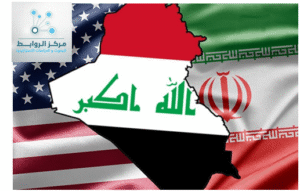
Special voting for military and security forces in parliamentary elections began in Iraq on Sunday., November 9,2025.
The voters included in the special vote are 597,453 for the Ministry of Interior, 298,054 for the Ministry of Defense, 128,127 for the Popular Mobilization Authority, 124,312 for the Ministry of Interior of the Kurdistan Region, 145,907 for the Ministry of Peshmerga, 18,410 for the Counter-Terrorism Service, and 1,596 for the Border Crossings Authority.
7,743 candidates are competing in the elections.
Some 21 million voters are eligible to cast their ballots to choose 329 members of the House of Representatives.
Millions of Iraqis are not allowed to run in these elections due to exclusion and marginalization, not to mention the approximately 9 million Iraqis living outside Iraq who have been denied the right to vote.
It is perhaps surprising that the arrival of US President Donald Trump’s representative, Mr. Mark Savaya, to Iraq was delayed even though about three weeks after the announcement of his assignment to this mission, which is tainted with doubts about its success, as happened with Trump’s other envoys in Syria and Lebanon, in contrast to the commander of the Iranian Revolutionary Guard Corps, General Esmail Qaani, who came to Iraq about 72 hours ago, to give his orders and directives to the parties and militias that are directly or proxy affiliated with Iran.
As for the parties and factions that participated in running for these elections, they are the same traditional parties that participate in power and parties of money and influence, in addition to other electoral lists that count themselves on the civil movements and some independent names (as they claim), but all of them revolve around the power parties and the powerful militias.
The information and data on the ground clearly indicate that the results will not be much different from previous election cycles.
As for what Foreign Minister Fuad Hussein said about the exclusion of 6 factions from the elections, this is difficult and perhaps not realistically possible, because they have been they have, nominated for the elections, which are directly or indirectly linked to them.
It is no secret to anyone who follows Iraqi affairs that these militias and other large parties have split horizontally and vertically, resulting in small lists and scattered personalities. Some are being split and running in separate lists, while others, some of which are split, are running in the elections. Still, in fact, it is a process of penetration and gaining more votes, of penetrating, and of reuniting after the elections under the names of “coalition, alliance, or joining” a bloc that includes all of them.
If there are sudden changes outside the calculations. In that case, it will inevitably occur after the elections, especially when the polls are shared during the process and not accounted for in the information process.
The role of Trump’s envoy Mark Savaya will likely emerge at this particular stage to limit Iranian influence, which may be achieved through the use of oft power through a “deal” from under the table or may — cut — i.e., escalate to hard power.
And the coming days are cords that give birth to every stranger.