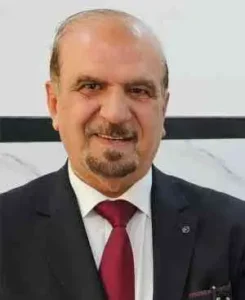
(Iraq between the ballot boxes and the trusteeship boxes… Reading in the 2025 Elections) By Muwaffaq Al-Khattab – Iraq –
By Muwaffaq Al-Khattab – Iraq –
(Iraq between the ballot boxes and the trusteeship boxes… Reading in the 2025 Elections)
By Muwaffaq Al-Khattab – Iraq –
THIS ARTICLE WAS PUBLISHED IN ARABIC ON NOVEMBER 8, 2025, ONE DAY BEFORE THE SO-CALLED ELECTION IN IRAQ.
Tomorrow, Iraq will enter a dangerous juncture, either to get it out of the bottleneck in which it has been trapped since the occupation in 2003, or there will be a radical change in the Iraqi scene, but it is fraught with dangers.
Tomorrow, the Iraqi voter will go to exercise his constitutional right in the 2025 parliamentary elections while he is under the weight of the same scene that accompanied all the previous sessions: recurring faces, most of which is corrupt in the financing of electoral campaigns that exceeded billions, rampant corruption, economic offices that exhausted the citizen and harmed his interests and delayed the wheel of reconstruction and investment, detailed laws, and a desperate voter who lost his confidence that his vote could change something of the post-2003 equation.
Despite repeated promises of reform and change, and the elimination of unbridled weapons and corruption, the facts on the ground indicate that the upcoming electoral process will not deviate much from the usual pattern formulated by partisan interests and regional and international trusteeships.
Let’s take a quick look at the most critical axes in these elections, gentlemen.
* St. Lego’s Law… Power Recycling Tool
The dilemma of the electoral law (known as “St. Lego” and its amendment that is also in favor of the blocs) is once again at the forefront of the blocs: it has been proven that this law tends to consolidate the dominance of the big blocs and disperse and drown out the small votes, which makes independents lose their opportunities and turn competition into a game of utilitarian balances rather than an expression of popular will.
* Exclusion of millions of displaced people… And a voice absent in exile
One of the most notable shortcomings of the 2025 elections and before is the deliberate disenfranchisement of millions of Iraqis in the diaspora, the majority of whom are from a specific sect that has been forcibly displaced over the past two decades. This exclusion is a structural imbalance that weakens the inclusiveness of the process and absents voices that could have reshaped the balance through accurate representation.
* Weapons and elections are a clear violation of the Constitution.
This time, the armed factions are participating directly or through political fronts in supporting candidates and nominating faction leaders, in clear violation of the Constitution provisions, which limit political action to civilians and to those who do not carry weapons outside the framework of the state. The presence of firearms beyond the state’s authority weakens the integrity of the vote and turns any contest into an armed, political power struggle.
* Outside domination… And the lost legitimacy of the interior.
Foreign influence, especially from the United States and Iran, and we do not overlook the role of Turkey and even some Arab countries, with less pressure, is still strongly shaping the features of the next stage. Each party seeks to arrange the parliament in a way that guarantees its interests, as the United States is keen on the form of the democratic process, only nominally committed to it, while trying to save face. In contrast, Iran seeks to ensure a parliament that maintains its political and military extensions and economic dominance inside Iraq, as it is its only breath and lung that will not do without it. This external competition leaves the national decision in a weak position.
* The position of Mr. Muqtada al-Sadr… Boycott as a tool of pressure and legitimate risk.
Sayyid Muqtada al-Sadr’s boycott of the elections, along with the bases of the Sadrist Movement and the Peace Brigades, and his steadfastness in his stance, which is fragmented for the first time, constitute both a balancing factor and a threat. Sadr has great popular weight and the ability to move the street, and his boycott is not just a withdrawal, but rather a pressure message that the political game is stolen and does not reflect the will of the people. Such a boycott may weaken turnout and diminish the legitimacy of the results, but at the same time raise the possibility of widespread protests if results are announced that Sadr’s public believes are predetermined and could hinder the formation of a government.
* Labor within the Coordination Framework: Potential for Disintegration.
Added to this is an essential strategic possibility: the disintegration of the Coordination Framework (the influential Shiite Alliance) if the parliamentary balance of power shifts in a way that displaces or reconstitutes key blocs. On top of these possibilities is the possibility that the election results will weaken the role of the “State of Law” led by Nouri al-Maliki or reposition him politically. And an apparent emergence of the bloc of the current Prime Minister, Mr. Mohammed Shia al-Sudani.
In a scenario that may seem likely, if an agreement or threat is issued that results in the removal or marginalization of the “State of Law” from under the cloak of some militias or traditional alliances (such as the Coordination Framework), Maliki may find himself faced with two harsh choices: either to remain in alliances that limit his influence or to try to “restore” his position through a conditional rapprochement with other powers,
and may force him to recalibrate his allegiances beyond Iran’s traditional axes, especially as Iran’s grip loosens. Such a shift, if it occurs, may be driven by some U.S. parties that want to see a Shiite leadership less subordinate to Tehran in exchange for clear conditions for ending the role of armed factions linked to the Iranian regime. But this scenario is fraught with risks, as we may witness a coup of loyalties within the Coordination Framework, which may provoke violent reactions from factions insisting on their political and military role, and may open the door to a new power battle within the Shiite House with the emergence of Mr. Sudani’s role as a strong competitor ready to implement any American demand in exchange for his support for a second term.
** Possible post-poll scenarios:
1. Continuation of the old pattern of recycling faces and blocs through the achievement of regional balances, and the results will be managed through negotiations and compromises.
2. Disintegration of the framework or rearrangement of loyalties, especially if large blocs are damaged or the balance of power changes (e.g., the decline of the “rule of law” or defections within the framework), we may see the reformation of Shiite alliances that may undermine the authority of some traditional factions or redirect their influence, and this may lead to a different government in loyalties if accompanied by U.S. diplomatic intervention or regional pressure.
3. A broad escalation of protest. If the results are tainted by fraud or the popular boycott escalates, the street (especially Sadr’s bases and the demonstrating youth) may reignite the protests, with the risks of a security and political explosion, and the situation is ripe for that.
The bottom line:
The elections are not just a race for seats, but a test of Iraq’s ability to regain its sovereignty.
As long as the laws are detailed on the size of the blocs, the expatriates are deprived of their rights, the armed factions treat the ballot box as booty, and the Sadrist boycott undermines the legitimacy of the process, the ballot boxes will remain like empty boxes that do not generate real change.
With the possibility of a rift within the coordination framework or the repositioning of figures such as Nouri al-Maliki, Qais al-Khazali, Hadi al-Amiri, and some influential figures and figures hiding behind the scenes, the door opens for a difficult stage of negotiations and the possibility of a shift of loyalties that will determine Iraq’s direction towards greater national independence, more subordination to regional balances, or a slide into chaos that will burn everyone. In light of all these possibilities, the key to the solution lies in real legal reform, electoral inclusivity, and the disarmament of the unruly outside the state system.
All of the above is subject to political fluctuations and the possibility of any confrontation and the resumption of the conflict between Iran and the Zionist entity, which will completely change the rules of the game.
We wish the Iraqi people to regain their prestigious position among the peoples of the region and rise, thanks to their position and resources as a modern state, away from the axes and tensions that threaten sovereignty and balance.