The absence of the intellectual and the rise of the tribe. By Zakaria Nimr
Translated by Ibrahim Ebeid from Arabic, Mach 8/2026
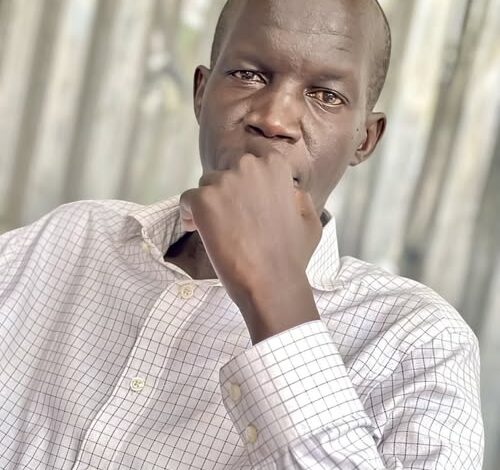
The absence of the intellectual and the rise of the tribe.
By Zakaria Nimr.
Translated by Ibrahim Ebeid from Arabic, Mach 8/2026
Cultural discourses have painted a romantic image of the intellectual philosopher as a constant defender of marginalized groups, a standard-bearer of social justice, and a spokesman for human rights and equality. However, this image, for all its moral beauty, often turns into a linguistic mask that hides a wide gap between word and deed, between discourse and reality. Philosophy, when detached from the test of reality, transforms from a tool of criticism and liberation into a comfortable discourse that bothers no one. There is no doubt that philosophy in its essence is based on the question of justice, and from the dismantling of the structures that produce injustice and inequality. Still, the more honest question is how many intellectual philosophers have left the space of safe theorizing and entered the space of costly action? Many intellectuals speak of the marginalized as an abstract idea, not flesh-and-blood human beings, who are called out in articles and seminars, and then practically marginalized when siding with them becomes politically or socially costly. Here, philosophy is transformed from a libertarian practice into a moral language without a trace.
The intellectual produces in-depth analyses of poverty, political economy, and the gap between the rich and the poor, but he often stands at the limits of diagnosis. The problem is not a lack of awareness, but a lack of courage to question the elites to which he himself belongs, or the cultural structures from which he benefits. Therefore, his discourse loses much of its credibility because justice that does not begin with self-criticism becomes an empty slogan. Defending human rights, gender equality, and racial justice has become part of the ready-made identity of the contemporary intellectual, but in many contexts it is a selective defense. These values are upheld when they are safe, but ignored when they collide with the social sacred, political power, or cultural fanaticism. The honest philosopher does not defend rights as an abstract universal concept, but as a painful local obligation that begins with a critique of the society to which he belongs.
In tribal and regional societies, this failure is multiplied. The division does not arise from a vacuum, but rather feeds on a more dangerous vacuum, represented by the absence of an active intellectual. When the role of critical thought declines, primary identities come to fill the scene, not as natural cultural affiliations, but as distorted political and moral alternatives. The tribe becomes a problem only when it becomes a single tool for interpreting the world, and the region does not turn into a weapon until the discourse that redefines citizenship and justice is absent from the logic of ‘them’ and ‘us’. When the intellectual is absent, the questions do not disappear, but move from the space of the mind to the space of instinct. A society that does not find anyone to explain the causes of poverty to it in terms of tribal grievances, and a society that does not hear a structural analysis of power, resorts to narratives of revenge and regional discrimination. At this point, nervousness becomes an easy, quick language, requiring only bias rather than thought, and the intellectual’s failure is revealed, leading to silence or neutrality, leaving the field open to simplistic hate speech. Many intellectuals avoid approaching the question of tribe and region because it is risky. Critique of tribalism means colliding with heritage, personal belonging, and social networks that provide protection and legitimacy. But a philosophy that does not dare to dismantle these structures loses its libertarian meaning. An intellectual who criticizes the state but remains silent about the symbolic or physical violence of his tribe practices a moral duplicity that is no less dangerous than the complicity of power.
The absence of the intellectual in fragile societies is not an individual issue but a phenomenon with direct consequences, including the escalation of hate speech, the acceptance of political conflict, the erosion of the concept of citizenship in favor of narrow loyalties, and the reproduction of violence generation after generation under the slogans of identity. To say that the intellectual philosopher is a real agent of change is not a ready-made fact, but a possibility conditioned by courage. Change is not made by consciousness alone, but by attitude. The biggest gap today is not only between thought and action, but also between knowledge and calculations of personal safety. Many intellectuals know what to say but choose to remain silent; they know where the injustice lies but prefer gray language, turning them into bridges between thought and action into soft barriers that prevent the necessary clash.
In tribal and regional societies, the role of the intellectual is not an elitist luxury, but an existential necessity. It is the one who dismantles the tribal myth without demonizing society, transforms belonging from a closed destiny into an open consciousness, and links social justice to citizenship rather than tribal weights or regional maps. When this role is absent, the state does not fill the vacuum, but it is filled with nervousness, and the scene is not led by reason but by fear. Philosophy is neither a cultural title nor a linguistic ornament. The intellectual philosopher is not the one who writes about justice, but the one who pays the price, not the one who speaks for the marginalized, but the one who gives them the space to speak. The absence of an intellectual does not only mean the silence of the mind, but also the unleashing