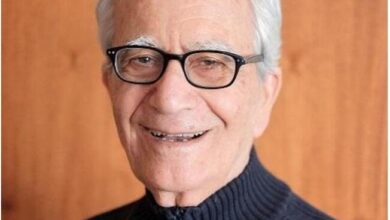
Bullying in Sudan is attached to Tribalism. By Zakaria Nimr.
Translated from Arabic by Ibrahim Ebeid.March 21/2026

Bullying in Sudan is attached to Tribalism.
By Zakaria Nimr.
Translated from Arabic by Ibrahim Ebeid.March 21/2026
Bullying in Sudan is closely linked to tribal and ethnic issues.
discrimination. Some powerful tribal or economic groups use bullying as a tool to reproduce social dominance, whether within schools, universities, workplaces, or even neighborhoods. Ridicule and contempt are means of reaffirming superiority and domination and perpetuating differences between groups. This discrimination creates a constant sense of threat among vulnerable groups, makes society less able to cooperate and develop, and leads to the spread of psychosocial violence in daily life.
The psychological effects of bullying are widespread and long-lasting. Victims often experience a loss of self-confidence, constant anxiety, depression, and, in extreme cases, suicidal ideation. At the social level, bullying reproduces violence, increases divisions between different individuals and groups, and weakens social cohesion. The view of condescension makes matters worse, as it perpetuates differences and creates an environment of fear and suspicion, hindering society’s capacity for cooperation and development.
Addressing the phenomenon requires comprehensive efforts that begin with education and awareness, extend to legal and institutional interventions, and provide psychological and social support. Success in confronting bullying reflects a society’s ability to recover and build trust among its members. At the same time, failure perpetuates a cycle of violence, social divisions, and the weakening of the social fabric. Confronting bullying in Sudan is a test of society’s ability to build justice and mutual respect and ensure a safe environment for future generations.
Why are some afraid of separating religion and State?
Talk of the separation of religion and State is very sensitive in many societies, as if this idea necessarily means declaring war on religion or undermining its position in society. Once it is presented, some people tend to defend religion as a threat, sometimes portrayed as a battle between faith and disbelief, or between preserving and abandoning values. But this sharp perception often hides behind a great deal of misunderstanding, and perhaps also some of the unspoken fear that has developed over history, culture, and politics.
In fact, this fear does not arise out of thin air. For centuries, the relationship between religion and political power has been intertwined in many societies. Religion has often been an important source of political legitimacy, and political power has, in turn, contributed to the protection of religious institutions and their social influence. Over time, many people have formed the mental image that the power of religion is linked to its proximity to power, and that its distance from the State may signal weakness or diminished influence in society. But this perception ignores an important fact: religion is not, at its core, a political institution, but a spiritual and moral experience that man has in his relationship with God, with himself, and with others. The values advocated by religion, such as justice, mercy, honesty, and tolerance, do not require political power to remain alive in society’s conscience. These values may even lose some of their meaning when they become slogans used in the power struggle.
One of the main reasons for the fear of separation of religion and State is the confusion between religion as a spiritual and moral value system and its use as a political tool. When religion is used in the political sphere, it becomes part of the game of interests and conflicts. It may serve to justify the authorities’ decisions or to confer moral legitimacy on them. Over time, it becomes difficult for some people to distinguish between defending religion and defending the authority that speaks for it.
Cultural and religious discourse in some societies also contributed to the consolidation of this fear, when the idea of separating religion from the State was portrayed as a project to remove religion from people’s lives or to eliminate its presence in society. Too often, this idea has been presented not as an attempt to regulate the relationship between the religious and political spheres, but as a direct threat to the faith itself. This oversimplification has contributed to a state of suspicion about every debate on this issue.
On the other hand, there is a psychological and social dimension to this fear. For many people, religion is an essential part of their cultural and spiritual identity. Any discussion about its position in the State could therefore be understood as an attempt to devalue or undermine this identity. In societies that have suffered from colonialism or political conflict, religion may also become a symbol of cultural resistance or social cohesion, heightening sensitivity to the debate over its relationship to the State. Some societies also fear that the separation of religion and State will lead to a decline in public morality or the spread of value chaos. It is widely believed that religion in state institutions is the primary guarantor of moral values in society. However, this belief implicitly assumes that morality can only be established through power, which is debatable. Human experience shows that moral values arise primarily from education, culture, and social awareness, rather than from laws or political institutions alone.
But the more realistic aspect of this debate may be about power and influence. Religion, when used in the political sphere, confers great symbolic power on those who speak for it. Abandoning this tool is therefore difficult for some political or social forces that have traditionally relied on religion to justify their influence or to give moral legitimacy to their decisions. In this case, the defense of religion in the State may turn into an indirect defense of the political interests associated with that presence.
Many historical experiments have shown that the overlap of religion and politics can yield complex outcomes. When religion becomes part of the political conflict, it can also be employed and divided. Conflicts may arise between different religious groups over who has the right to represent or interpret religion within the State. In this case, religion is transformed from a factor of spiritual and moral unity into an element of political and social division. For this reason, some thinkers argue that the separation of religion and State is not intended to weaken religion, but rather to protect it from political conflict. When religion remains in its spiritual and moral sphere, it is more able to influence the individual and collective conscience without becoming an instrument in the power struggle. At the same time, the State can manage society’s affairs based on laws and institutions that are equal for all citizens, regardless of their religious beliefs.
However, this balance is not easy to reach, especially in societies that have not yet decided the nature of the relationship between religion and politics. Therefore, an honest discussion on this issue requires a great deal of intellectual calm and honesty in asking questions. The problem is not in religion itself, nor in the idea of the modern State, but in how to regulate the relationship between them in a way that protects religious values while maintaining the State’s justice and neutrality. We need realistic solutions that can help societies move beyond this chronic controversy. The first of these solutions is to consolidate the concept of state neutrality towards religions. A just state does not impose a particular religion on its citizens, nor does it prevent them from practicing their beliefs. Rather, it seeks to provide a legal environment that protects the freedom of all and prohibits discrimination based on religion.
The second solution is to promote the principle of religious freedom. When people feel that their faith is protected by law and that they have the right to practice their religion without fear or persecution, they feel less like the State is a threat to their religion. They may even see it as a guarantee of their freedom of belief.
The third solution focuses on promoting intellectual and cultural awareness within the community. Many of the concerns associated with the separation of religion and State stem from misunderstandings or stereotypes that have taken root over time. Disseminating knowledge and promoting intellectual dialogue can therefore help build a more balanced understanding of the issue.
Religious institutions themselves can also play a positive role in this area by focusing on their moral and spiritual mission rather than directly engaging in political conflict. Religion has great power to guide the human conscience and promote social values, and this energy may be most effective when kept free of calculations of power.
It is also important to develop State institutions based on the principles of transparency, justice, and accountability. The stronger the State is in its just institutions and laws, the less it will depend on religion as a source of political legitimacy. In turn, citizens feel increasingly confident in the State as a just framework that regulates their common life. The real question may not be why some people are afraid of separating religion from the State, but how to build a healthy relationship between them. Religion can remain an important source of spiritual values and meanings in people’s lives. In contrast, the State remains a political institution whose mission is to organize public life on the basis of justice and equality among citizens.
When this balance is achieved, society may discover that the separation of religion and State does not mean hostility between them, but may be a means of protecting both. Religion remains free in its spiritual and moral mission, and the State remains neutral and fair towards all its citizens. It is in this balance that perhaps the wisest way to build a society that respects faith while protecting the freedom of all