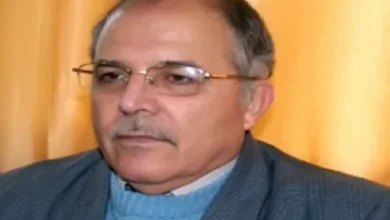
Lebanon between Sectarianism and the National Project: The Dialectic of Division and Sovereignty Critique of the sectarian structure and the possibilities of transformation towards a nation-state Hassan Khalil Gharib Translated from Arabic by Ibrahim N. Ebeid August 3/2026
Translated from Arabic by Ibrahim N. Ebeid August 3/2026

The Arab Socialist Vanguard Party of Lebanon ( Baath Party)
Lebanon between Sectarianism and the National Project: The Dialectic of Division and Sovereignty
Critique of the sectarian structure and the possibilities of transformation towards a nation-state
Hassan Khalil Gharib
Translated from Arabic by Ibrahim N. Ebeid, August 3/2026
Lebanon is a typical case of a State crisis in the Arab world, where two contradictory projects coexist: a sectarian project that reproduces division and holds the State hostage to foreign interference, and a nationalist project that seeks to build a fully sovereign nation-state.
This contradiction transcends everyday politics, becoming an existential conflict between the logic of the sectarian farm and that of the modern State.
In this context, the Arab nationalist project emerges as a framework for liberation that can redefine national identity around inclusive citizenship. At the same time, sectarianism reveals that it is a tool used by colonialism to weaken the State and perpetuate dependence.
Examining this dialectic opens the door to a deeper understanding of Lebanon’s transformational potential, whether by drawing inspiration from other Arab experiences or by confronting internal structural challenges.
First: Sectarianism and what it should be:
1- Sectarianism is an internal factor that benefits the colonial powers: The sectarian system is not just a social tradition, but a colonial tool that has been reproduced since the establishment of the Lebanese entity. Sectarianism turns the State into a union of sects, leaving it unable to exercise true sovereignty. In this sense, sectarianism is not just an internal imbalance, but part of an external project to keep Lebanon weak and fragmented.
2- The national project as a radical alternative: In the face of sectarianism, the national project proposes an alternative vision based on citizenship and an inclusive national identity. This project is not limited to partial reforms. Still, it seeks to re-establish the State on secular and democratic foundations, so that belonging to the homeland becomes a matter of belonging to the homeland rather than to a sect. This is where the radical contradiction emerges: either a modern citizen State, or a sectarian farm run by the logic of quotas.
Social justice as a condition for stability: Sectarianism feeds on poverty and marginalization, while social justice weakens the logic of division. Therefore, no national project can succeed without socio-economic reform that ensures balanced development between regions. Social justice is not just an economic demand, but a political condition for building a modern State.
4. Comparison with other Arab experiences: In Tunisia, the civil constitution after the revolution was an attempt to overcome divisions and build a State of citizenship. In Algeria, the post-independence national project provided a framework for building a modern State despite the challenges. These experiences confirm that it is possible to overcome division and that sectarianism is not an inevitable fate but rather a political choice that can be changed.
In summary, Lebanon faces a historic crossroads: either continue the sectarian farm logic that reproduces division and holds the State hostage to foreign interventions, or pursue a modern nationalist project that re-establishes the State on the basis of citizenship, secularism, and social justice. The contradiction between sectarianism and the national project is not just an intellectual debate but an existential struggle that determines Lebanon’s future as a fully sovereign State or a fragile entity. Overcoming sectarianism is not a partial reform option but rather a historical necessity for Lebanon’s survival as a modern nation-state in its Arab surroundings.
Second: Religious-political movements carry deep structural disadvantages:
Religious-political movements represent the antithesis of the project of the nation and nation-state. These movements do not produce a unified national project; instead, they reproduce division and dependence. The disadvantages of this relationship can be summarized in the following points:
1- Undermining the concept of the national State: Religious-political movements offer loyalty to a creed or sect at the expense of loyalty to the homeland, which leads to the dismantling of the State and its transformation into conflicting sectarian entities. This approach weakens the idea of national sovereignty and makes the State hostage to external religious references.
2- Disrupting the Arab national project: The Arab national project is based on the unity of destiny and identity. At the same time, religious-political movements redefine belonging on a religious or sectarian basis, which dismantles national ties and transforms the conflict from national to sectarian.
3. Justification of external intervention: When these movements present themselves as protectors of a sect or sect, they open the door for regional and international powers to intervene under the banner of “protecting minorities” or “supporting the believers,” which enshrines dependence and weakens the independence of national decision-making.
4- Abolishing the critical mind: The use of religion in politics turns faith into an emotional mobilization tool, and excludes the critical and rational thought that societies need to build their renaissance. In doing so, politics becomes an arena for fatwas rather than national dialogue.
5. Aborting social reform: Religious-political movements tend to preserve traditional structures, and oppose reforms that affect the power structure or social relations, thereby hindering the democratic development and social justice that form the basis for building the modern State.
In summary, the relationship between the State and religious-political movements produces division rather than unity, and dependence rather than sovereignty. It weakens the Lebanese national project and transforms religion from a value system into an instrument of political conflict. Therefore, religion must be separated from the State, and a national-civil project must be built that restores citizenship and critical reason, as the only way to rid Lebanon and the Arab world of political sectarianism and the dominance of religious ideology in the public sphere.
Third: Positive in the relationship with the Arab depth, and negative in the relationship with the forces that export sectarianism.
1- The relationship between the Arab national project and Lebanon’s salvation from political sectarianism: It is an interactive relationship with mutual positive repercussions, because both are based on the idea of overcoming internal division and building an inclusive identity. In his intellectual essays, Hassan Khalil Gharib argues that the Arab national project is not merely a political framework but a value system capable of restoring Lebanon’s national balance.
2- The national project as a framework for liberation from sectarianism: The Arab national project offers Lebanon an alternative model to sectarian affiliations, as it links national identity to Arab affiliation rather than to sect or sect. This intellectual transformation opens the door to building a State of citizenship, where loyalty is to the homeland rather than to the sect, thereby weakening the roots of the sectarian system from within.
Lebanon as a platform for the renewal of the national idea: Lebanon, on the other hand, offers the Arab national project a rich intellectual experience, because its cultural and religious pluralism can be transformed from a source of division into a model of Arab coexistence. When Lebanon is freed from sectarianism, it becomes a microcosm of possible Arab unity, showing that nationalism is not the abolition of diversity but its organization within an inclusive national framework.
4- Integration between the political and cultural dimensions: The Arab national project provides Lebanon with a political umbrella that protects it from dependence on the outside world. In contrast, Lebanon gives the national project a cultural and humanitarian dimension that promotes freedom and pluralism. This integration makes Arab nationalism a realistic project rather than a slogan, and turns it into a tool for building the modern State.
5. Redefining sovereignty: Sovereignty is not only based on the independence of political decision-making, but also on the independence of collective consciousness. The Arab national project restores Lebanon to its Arab depth, freeing it from dependence on regional axes, and restoring its natural role as a bridge between the Arab Levant and Maghreb.
In summary, the mutually reinforcing implications of the Arab nationalist project and Lebanon’s liberation from political sectarianism are that both redefine identity around citizenship and national belonging rather than sect or external loyalty. The more the national project advances in the region, the greater the chances of Lebanon breaking free from its sectarian system, and the closer Lebanon gets to building a modern national State, the more realistic and credible the Arab national project will become.
This mutual interaction makes Arab nationalism a horizon for national liberation and a gateway to building a modern State in Lebanon and the Arab world together.
General Conclusion
Lebanon faces a historic crossroads: either continue the logic of sectarianism that reproduces division and holds the State hostage to foreign interventions, or engage in a modern national project that re-establishes the State on the foundations of citizenship, secularism, and social justice. A positive relationship with the Arab depth allows Lebanon to break free from its structural crises. In contrast, a negative relationship with religious-political movements reproduces division and opens the door to dependency. Overcoming sectarianism is not a partial reform option, but rather a historical necessity for Lebanon’s survival as a modern nation-state in its Arab surroundings. In this sense, the Arab national project becomes not just an intellectual alternative, but a horizon for national liberation and a gateway to building a modern State capable of protecting its citizens and preserving its sovereignty.